13 Apr 2026
Harrah’s Oklahoma Breaks Ground in Chandler: Caesars Entertainment and Iowa Tribe Unveil $40 Million Gaming Destination

A New Chapter for Tribal Gaming in Oklahoma
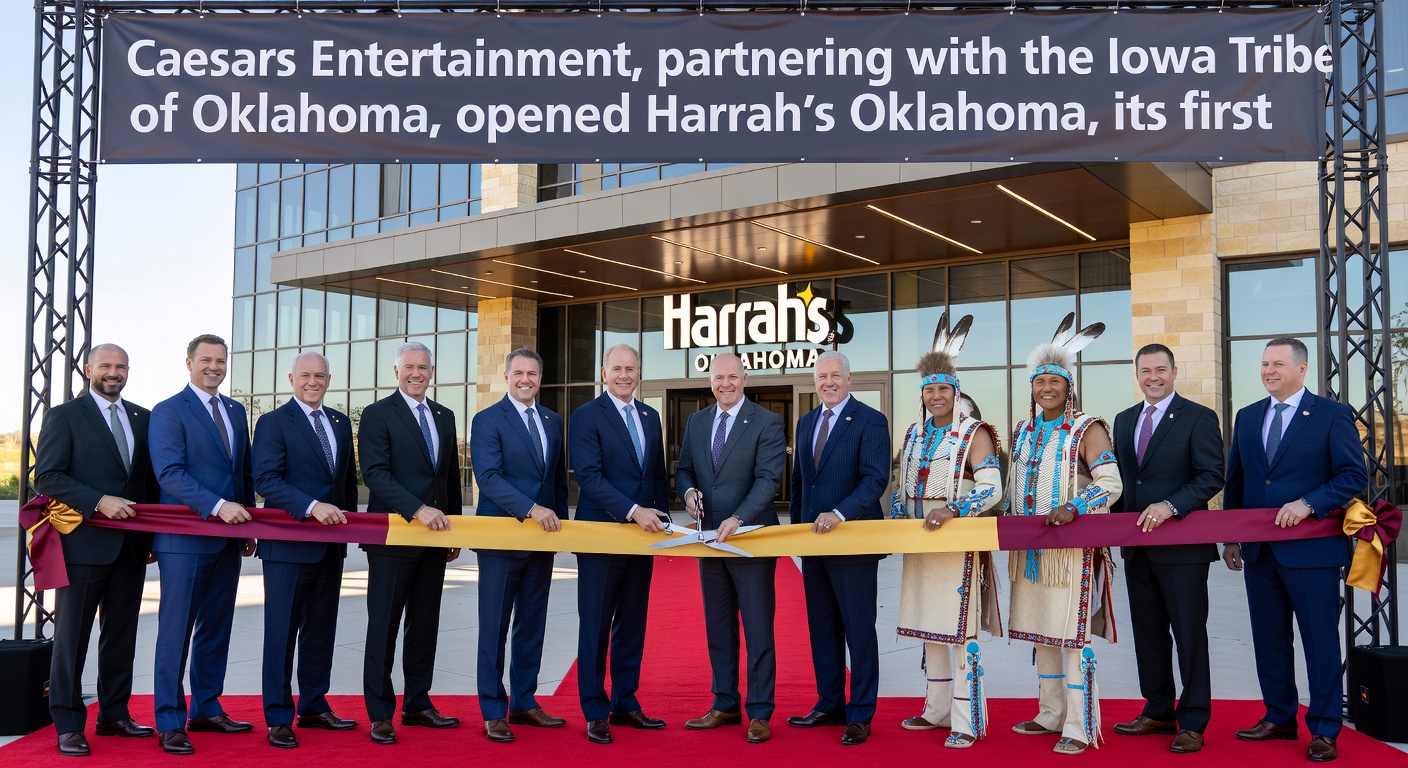
Caesars Entertainment, in partnership with the Iowa Tribe of Oklahoma, has officially opened Harrah’s Oklahoma, marking the company's first casino venture in the state; located in Chandler about 40 miles northeast of Oklahoma City, this 45,000-square-foot facility replaces the tribe's smaller Ioway Casino and brings a host of modern gaming options to the region. The $40 million project, financed equally by both parties after nearly three years of collaboration, features over 1,000 slot machines, a dedicated high-limit gaming room, a dozen live dealer table games, multiple restaurants, and bars, all designed to attract both local players and visitors from nearby areas.
Observers note how this opening aligns with broader trends in tribal gaming expansions across the U.S., where partnerships between established operators like Caesars and sovereign tribes have accelerated development; data from the National Indian Gaming Commission indicates that tribal casinos generated $39.6 billion in gross gaming revenue last year, underscoring the sector's economic muscle even as competition heats up. What's interesting here is the seamless transition from the old Ioway Casino, which operated on a more modest scale, to this upgraded destination that promises enhanced experiences while creating over 300 jobs in Lincoln County.
Inside the Facility: Slots, Tables, and Amenities That Draw Crowds
The heart of Harrah’s Oklahoma lies in its gaming floor, where more than 1,000 slot machines offer a mix of classic reels and cutting-edge video slots, complemented by a high-limit room for players seeking bigger stakes; a dozen live dealer table games, including blackjack, roulette, and poker variants, provide that authentic casino buzz, while the layout ensures smooth flow between areas so patrons can hop from slots to tables without missing a beat. Restaurants and bars dot the space, serving up everything from quick bites to full meals, and the overall design emphasizes comfort, with ample seating and intuitive navigation that keeps things running efficiently even during peak hours.
Those familiar with Caesars properties recognize familiar branding touches, like the Harrah’s logo prominently displayed, yet the venue adapts to its tribal roots by incorporating elements that honor Iowa Tribe heritage; turns out, this blend not only boosts appeal but also strengthens community ties, as local hires fill roles from dealers to maintenance staff. And with the facility spanning 45,000 square feet, it dwarfs the previous Ioway Casino, allowing for spacious layouts that reduce congestion—a common pain point in older tribal operations.
From Collaboration to Opening: Three Years of Strategic Planning
The journey to this launch began almost three years ago, when Caesars Entertainment and the Iowa Tribe sat down to explore expansion possibilities; equal financing from both sides ensured shared commitment, with Caesars bringing its operational expertise—honed at properties like Harrah’s in Las Vegas and Atlantic City—while the tribe leveraged its sovereign land rights in Chandler. Regulatory approvals moved steadily, reflecting Oklahoma's supportive stance on tribal gaming compacts, and construction wrapped up on schedule, leading to the grand opening that drew tribal leaders, Caesars executives, and hundreds of guests.
Experts who've tracked similar deals point out how these partnerships often hinge on mutual benefits, like Caesars gaining a foothold in a state with 130+ tribal casinos, and tribes accessing top-tier management know-how; figures from the American Gaming Association show that such collaborations have spurred $15 billion in investments over the past decade, creating ripple effects in rural economies like Chandler's. But here's the thing: this isn't just about gaming—it's about positioning Harrah’s Oklahoma as a hub that could draw traffic from Oklahoma City, just a short drive away.
Economic Boost and Job Creation in Lincoln County
Over 300 jobs now stem from Harrah’s Oklahoma, ranging from gaming positions to hospitality roles, injecting vitality into Chandler's local economy where unemployment has hovered above state averages; the Iowa Tribe emphasizes training programs that prioritize tribal members, ensuring long-term benefits ripple through the community, while vendors and suppliers from Oklahoma City and beyond gear up for steady business. Data indicates tribal casinos like this one contribute millions in state fees and taxes annually, supporting schools, roads, and public services without straining local budgets.
Take one comparable case: the Choctaw Casino expansions nearby, which generated 1,200 jobs and $2.5 billion in economic impact over five years, as reported by state analyses; Harrah’s Oklahoma follows that playbook, positioning itself to multiply visitor spending on dining, drinks, and entertainment. So while the immediate win is those 300-plus positions, the real payoff unfolds as foot traffic builds, turning a quiet town into a destination spot.
It's noteworthy that projections for 2026, including potential April openings of nearby attractions, could amplify this momentum; observers expect Harrah’s to capture a slice of that growth, especially with Oklahoma's gaming market expanding amid tourism rebounds.
Future Horizons: Hotel Expansion on the Horizon
Plans for growth already simmer at Harrah’s Oklahoma, with talks of a 200-room hotel addition that would elevate it from day-trip venue to overnight getaway; this move mirrors strategies at other Caesars tribal outposts, where lodging boosts dwell time and revenue by 30-40%, according to industry benchmarks. The Iowa Tribe and Caesars envision phased development, starting with feasibility studies tied to opening-year performance, so success on the gaming floor paves the way for beds, conference spaces, and perhaps a pool or spa.
People who've studied tribal casino trajectories know that hotels often unlock VIP programs and events, drawing conventions or concerts; yet the ball remains in their court, dependent on market response and regulatory nods from bodies overseeing Oklahoma's compact system. What's significant is the forward-thinking approach—three years in the making, but already eyeing tomorrow.
And as April 2026 approaches, whispers of regional events and infrastructure upgrades nearby suggest Harrah’s could sync perfectly, pulling in crowds from Tulsa and beyond while solidifying its role in the state's gaming tapestry.
Navigating Regulations and Community Ties
Oklahoma's tribal gaming landscape thrives under Class III compacts, which Harrah’s Oklahoma operates within, ensuring fair play through audits and player protections; the Iowa Tribe maintains oversight alongside Caesars' standards, a dual layer that reassures patrons. Community engagement runs deep too, with the tribe committing portions of proceeds to local charities, education, and health initiatives—patterns seen across Oklahoma's 33 tribes with operational casinos.
Turns out, these openings often spark dialogues on responsible gaming, with venues like Harrah’s rolling out self-exclusion tools and staff training; researchers tracking such sites find that well-managed facilities see higher guest satisfaction, looping back to loyalty programs that keep slots spinning and tables full.
Wrapping Up the Launch: A Milestone for All Involved
Harrah’s Oklahoma stands as a testament to what happens when Caesars Entertainment's scale meets the Iowa Tribe's vision, delivering a $40 million upgrade that replaces a modest casino with a vibrant 45,000-square-foot powerhouse; over 1,000 slots, live tables, dining options, and 300-plus jobs define its debut, built on three years of equal-partner collaboration and poised for hotel growth. As Chandler embraces this addition, the facility not only reshapes local gaming but also hints at bigger plays ahead, especially with 2026's horizon bringing fresh opportunities.
The reality is clear: this opening bolsters Oklahoma's tribal sector, drives economic wins, and sets a template for future partnerships, all while keeping the focus on quality experiences that draw players back time and again.